Brush Removal in Van, TX
Yaupon, briars, privet and sweetgum scrub cleared off your lot or pasture so you can use it again.
Brush Removal in Van
Leave a piece of ground alone for three summers in Smith County and the brush owns it. Yaupon fills in head high, greenbriar ties it together, privet and young sweetgum push up through old pasture, and a lot you could once mow becomes a wall. Brush removal is getting that growth off the land and giving it back to you. Around Tyler I handle it two ways: mulching the brush in place, which is fastest and cheapest and leaves a clean layer of chips, or cutting and hauling it where you want the material gone, such as next to a house or on a finished lawn. I clear brush off overgrown lots in town, off acreage people have just bought in Lindale, Van and Chandler, around ponds and barns on ranchettes near Bullard and Whitehouse, and off pasture edges from Canton to Jacksonville. East Texas brush grows back thick and grows back fast, so I also tell you honestly what it takes to keep it down once it is gone.
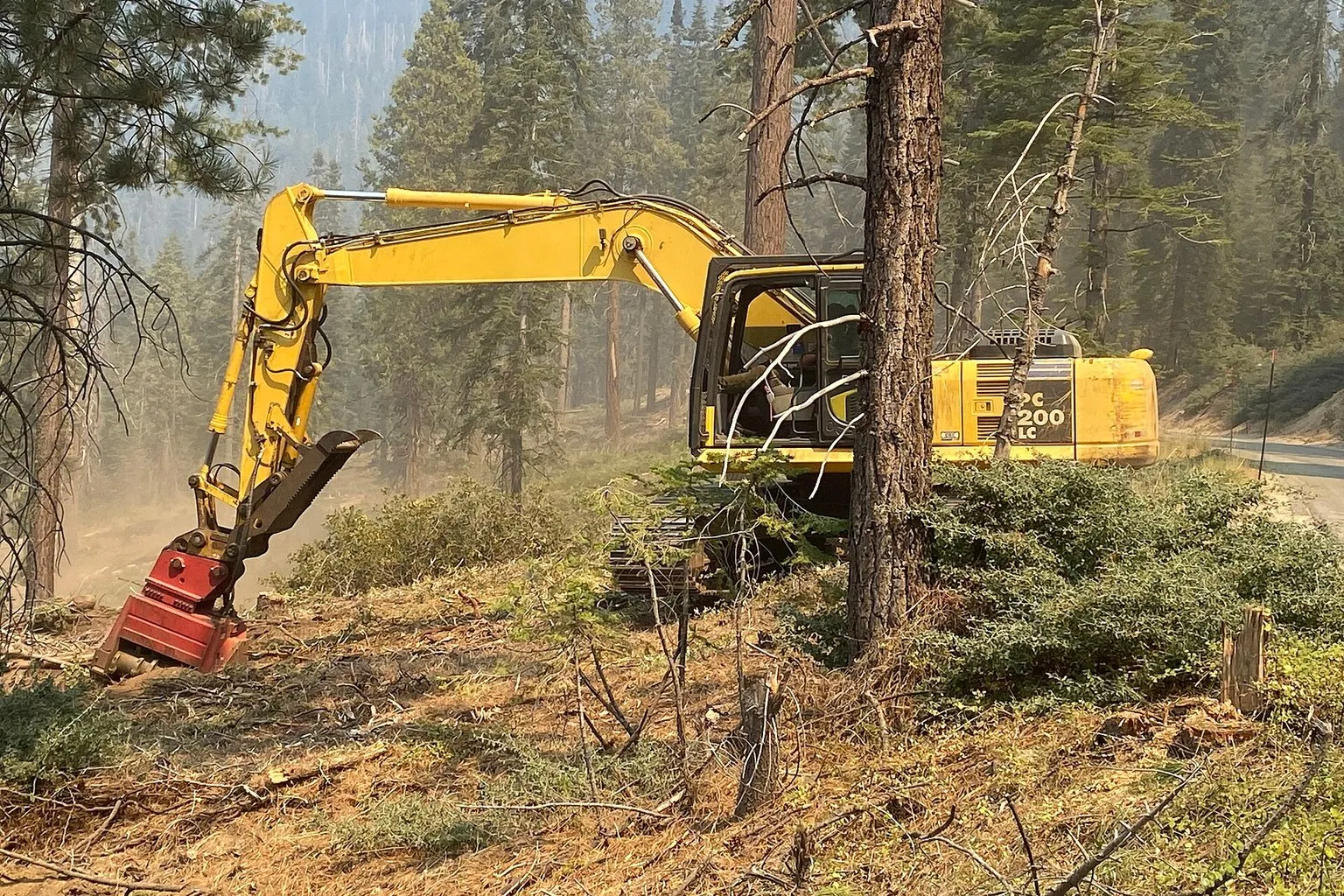
Land clearing in Van
Van is a small Van Zandt County town on I-20 between Lindale and Canton, best known for the Van oil field that was discovered under it in 1929 and still has pumpjacks nodding in the pastures around town. Hwy 110 runs north from the interstate through Van, FM 314 runs south toward Edom, and the land on all sides is a mix of sandy pasture, post oak and pine woods, and old lease ground that nobody has cleared since the oil boom. It is cheaper than Lindale and Tyler and an easy run to Dallas on I-20, so acreage around Van is moving. I clear homesites and drives for people building out here, mulch understory on wooded tracts off Hwy 110 and FM 314, clear fence lines and reopen lease roads and pipeline rights-of-way on old oil field acreage, and take back pasture that has gone to sweetgum, briars and cedar. The ground is sandy and the brush comes back fast, so I lean on mulching: it clears everything in a pass, leaves chips on the ground instead of bare sand, and costs less per acre than a push-and-burn clear. Per-acre or per-job price, set after I walk the tract with you.
- Yaupon, greenbriar, privet, sweetgum and scrub cleared
- Overgrown lots, lake lots, pasture and ranchette ground reclaimed
- Brush cleared back from homes, barns, ponds and drives
- Mulched in place or cut and hauled, priced either way
- Sight lines, trails and access reopened
- A realistic plan for keeping it down afterward
Need brush removal elsewhere? See all of my Van services or brush removal across Tyler.
Brush Removal in Van
Tell me about the property and I’ll call you back. Local Van land clearing.
Areas We Cover in Van
In town or out on a county road: if it’s in or around Van, I come to your property.
- I-20 corridor
- Hwy 110 North
- FM 314 toward Edom
- Edom
- Old Van oil field
- Ben Wheeler side
Common Clearing Scenarios in Van
The land clearing jobs I see most around here, and how I handle them.
Old oil field acreage with lease roads and pipelines
A lot of land around Van carries old well pads, lease roads and pipeline strips that have grown shut since the field slowed down. I reopen the roads, clear the rights-of-way to width and mulch the brush off old pad sites so the acreage is usable again.
Pasture going to cedar, briar and sweetgum
Van Zandt County is where East Texas pine starts giving way to post oak savannah, and the brush that takes pasture here is greenbriar, eastern red cedar and sweetgum saplings. Mulching clears all three and leaves the ground covered, not scraped.
New homesites off the interstate
People commuting toward Dallas are buying tracts off Hwy 110 and FM 314 and building. I open the pad and drive, mulch the understory on the rest and leave the oaks and pines standing.
Brush Removal in Van: FAQs
Do you clear land around Van and Edom?
Can you work around old wellheads and pipelines?
Is mulching the right way to clear cedar off pasture?
What is the difference between brush removal and forestry mulching?
Can you clear the brush without hurting the trees I want to keep?
How do I keep the brush from coming right back?
Also Serving Near Van
Need Brush Removal in Van?
Call for a straight quote. I come to your property, walk the land with you and price it by the acre or the job.