Selective Underbrush Clearing in Van, TX
Underbrushing: the yaupon, briar and scrub under your trees ground out while every pine and oak you want stays standing.
Underbrush in Van
Underbrushing is thinning out the tangle beneath your trees while leaving the trees themselves alone, and in Smith County that means a fight with yaupon. Yaupon holly grows into a solid, head-high thicket under loblolly pine and post oak, and with greenbriar, privet and young sweetgum it turns a pretty stand of timber into something you cannot see into, walk through or hunt. I grind that understory out with the mulcher and leave a clean floor of chips under the canopy. The result is open, park-like woods: shade on top, mulch underneath, sight lines all the way across the property. It is the first thing most people want done on a wooded homesite in Flint, Whitehouse or Lindale, the way lake lot owners at Lake Palestine and Lake Tyler open up a view, and how hunters and recreational owners on bigger tracts around Mineola, Gilmer and Jacksonville get their woods usable again. The big trees stay. The junk growth choking the ground under them goes.
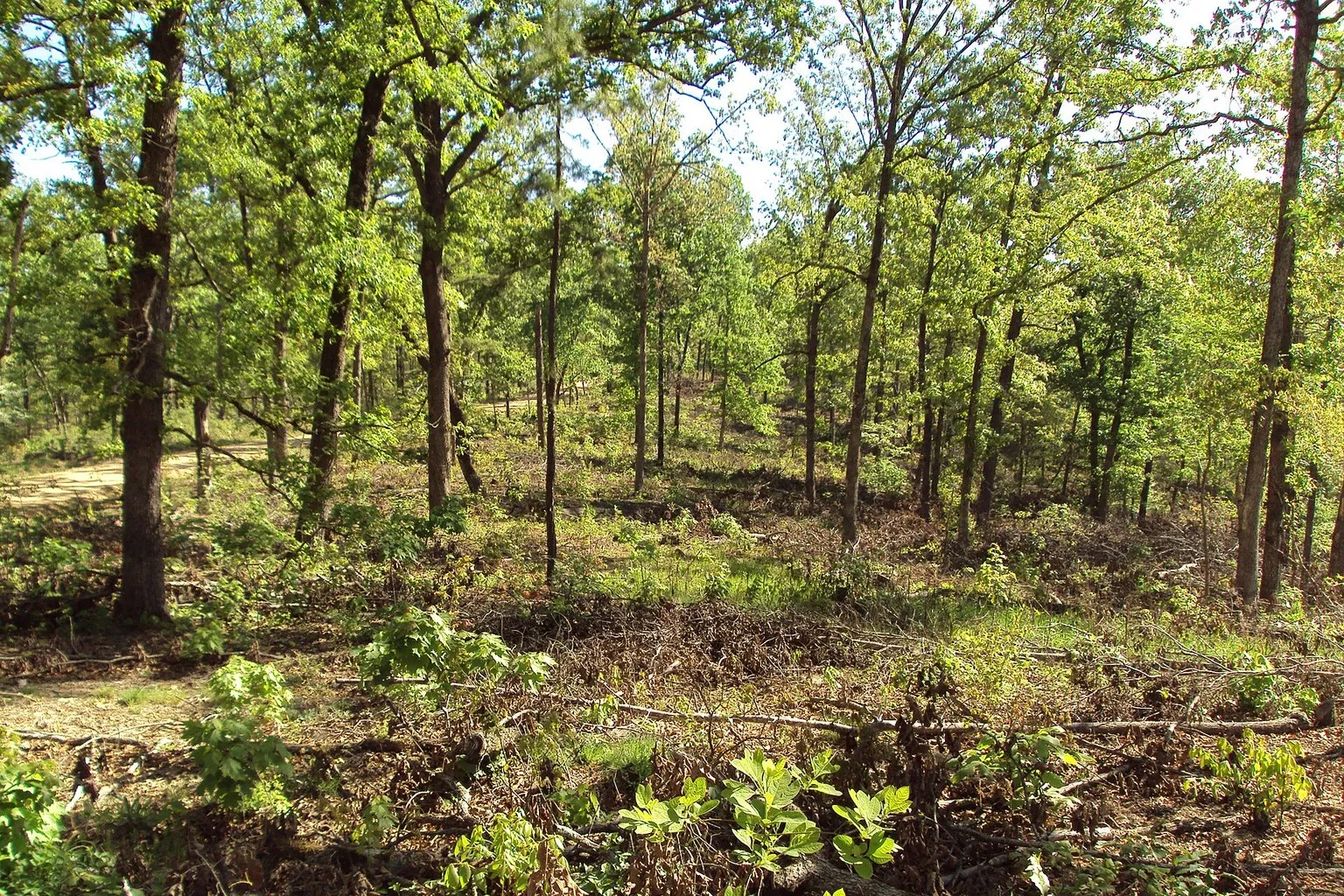
Land clearing in Van
Van is a small Van Zandt County town on I-20 between Lindale and Canton, best known for the Van oil field that was discovered under it in 1929 and still has pumpjacks nodding in the pastures around town. Hwy 110 runs north from the interstate through Van, FM 314 runs south toward Edom, and the land on all sides is a mix of sandy pasture, post oak and pine woods, and old lease ground that nobody has cleared since the oil boom. It is cheaper than Lindale and Tyler and an easy run to Dallas on I-20, so acreage around Van is moving. I clear homesites and drives for people building out here, mulch understory on wooded tracts off Hwy 110 and FM 314, clear fence lines and reopen lease roads and pipeline rights-of-way on old oil field acreage, and take back pasture that has gone to sweetgum, briars and cedar. The ground is sandy and the brush comes back fast, so I lean on mulching: it clears everything in a pass, leaves chips on the ground instead of bare sand, and costs less per acre than a push-and-burn clear. Per-acre or per-job price, set after I walk the tract with you.
- Yaupon, greenbriar, privet and young sweetgum ground out under the canopy
- Every mature pine, post oak and shade tree left standing
- Clean mulch floor instead of debris piles
- Open, walkable woods with sight lines across the tract
- Better wildlife browse and lower fire fuel around structures
- Homesites, lake lots, hunting ground and recreational acreage
Need underbrush elsewhere? See all of my Van services or underbrush across Tyler.
Underbrush in Van
Tell me about the property and I’ll call you back. Local Van land clearing.
Areas We Cover in Van
In town or out on a county road: if it’s in or around Van, I come to your property.
- I-20 corridor
- Hwy 110 North
- FM 314 toward Edom
- Edom
- Old Van oil field
- Ben Wheeler side
Common Clearing Scenarios in Van
The land clearing jobs I see most around here, and how I handle them.
Old oil field acreage with lease roads and pipelines
A lot of land around Van carries old well pads, lease roads and pipeline strips that have grown shut since the field slowed down. I reopen the roads, clear the rights-of-way to width and mulch the brush off old pad sites so the acreage is usable again.
Pasture going to cedar, briar and sweetgum
Van Zandt County is where East Texas pine starts giving way to post oak savannah, and the brush that takes pasture here is greenbriar, eastern red cedar and sweetgum saplings. Mulching clears all three and leaves the ground covered, not scraped.
New homesites off the interstate
People commuting toward Dallas are buying tracts off Hwy 110 and FM 314 and building. I open the pad and drive, mulch the understory on the rest and leave the oaks and pines standing.
Underbrush in Van: FAQs
Do you clear land around Van and Edom?
Can you work around old wellheads and pipelines?
Is mulching the right way to clear cedar off pasture?
What exactly is underbrushing?
Will clearing the underbrush hurt my big trees?
How long before the yaupon is back?
Need Underbrush in Van?
Call for a straight quote. I come to your property, walk the land with you and price it by the acre or the job.